The problem
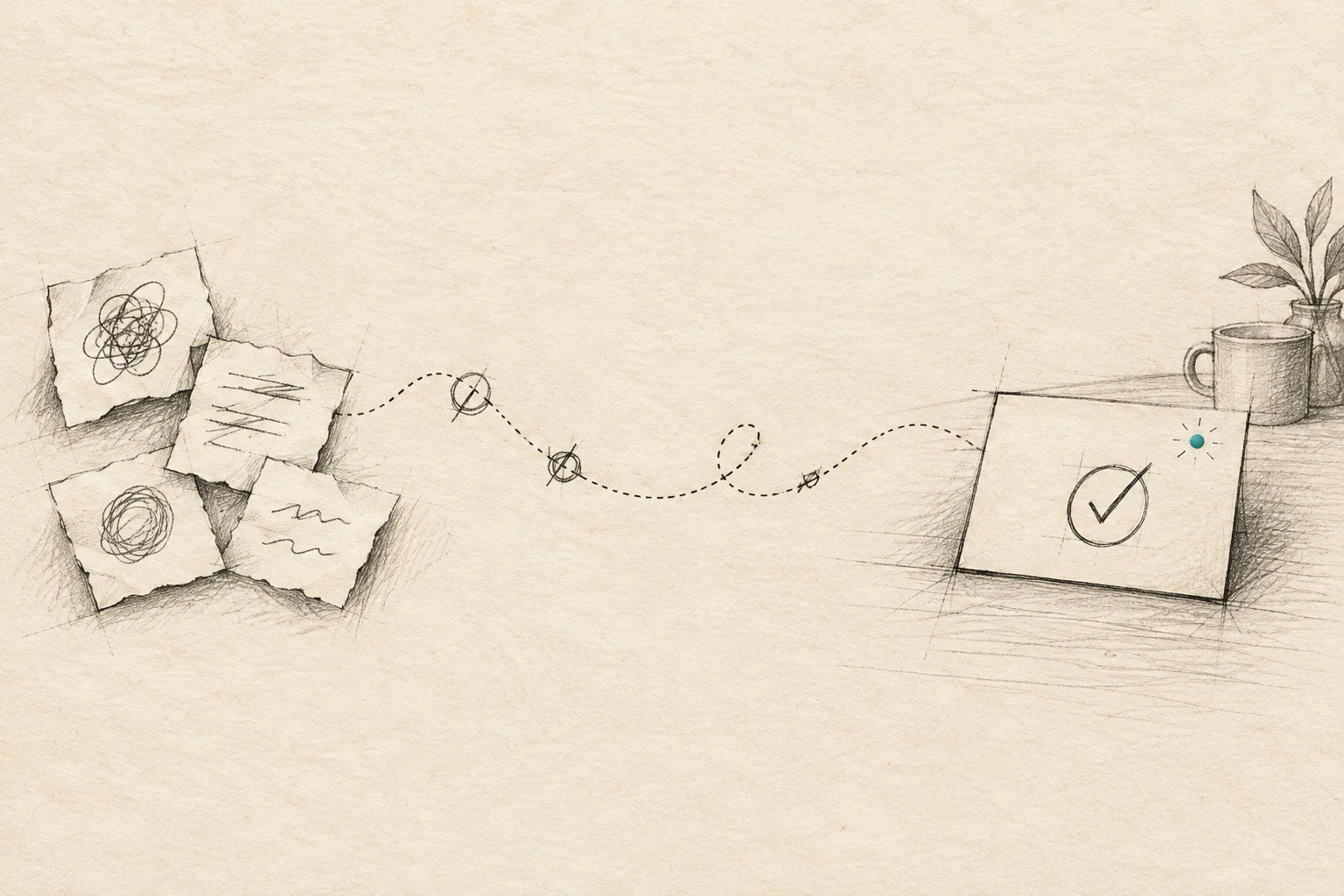
Good ideas were arriving in too many places.
Requests and notes could easily become scattered across conversations and different working spaces. That made ownership, status, and the next action harder to see. The classic problem: idea in one place, task in another, follow-up depending on memory. Risky arrangement.
Why I built it
I wanted a calmer way to move work forward.
The aim was to capture an idea once, review it properly, decide whether it should move, and keep the follow-through visible.
What I tested
A simple path from thought to action.
I tested whether clear stages, ownership, and review points could reduce repeated questions without making the process feel heavy.
What changed
Tasks became easier to review and hand over.
The work now has a clearer place, a visible state, and a more deliberate path between a rough idea and approved execution.
What I learned
A system is useful only when it makes decisions simpler.
More structure is not always better. The useful parts are the ones that reduce confusion and help the right person see what comes next.
Next improvement
Make the review rhythm even cleaner.
I am improving summaries and keeping a clearer separation between a draft, an approved task, and work that can move automatically.